- Follow Us:
- (910) 276-8400


How to Choose the Right Nursing Home in Laurinburg, NC: A Guide From Scottish Pines
September 24, 2026
When Does a Wound Require Skilled Nursing Care? A Guide From Scottish Pines
October 23, 2026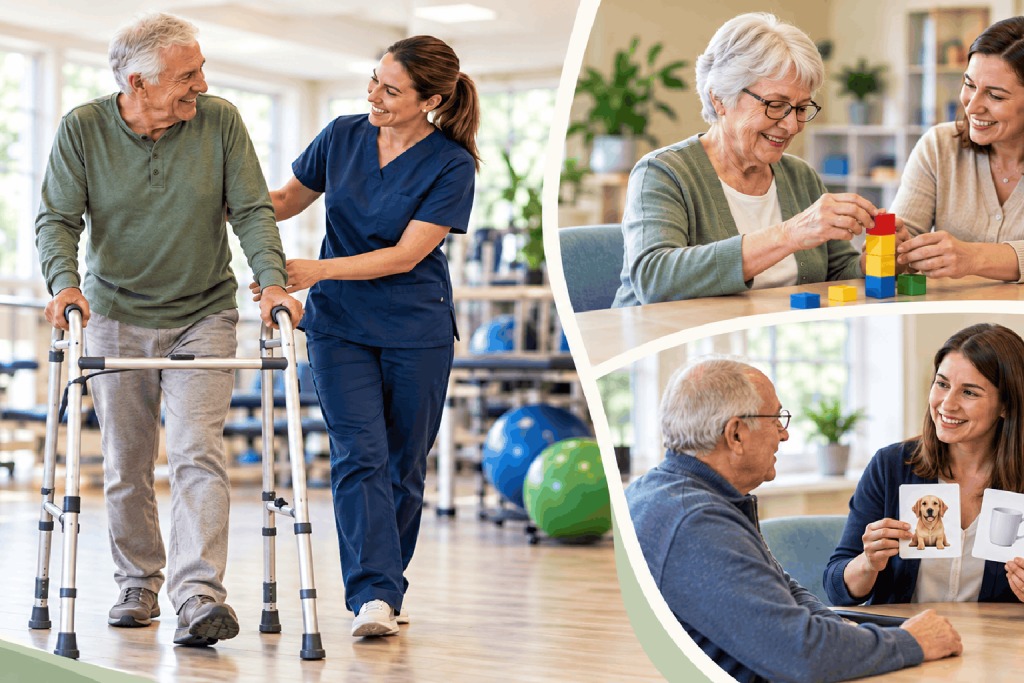
Physical, occupational, and speech therapy each play a different role in recovery, and together they help residents return to the routines that matter most.
After a hospital stay, surgery, illness, injury, or other health event, recovery often involves more than rebuilding strength. An older adult may need to learn to walk safely, dress independently, communicate clearly, swallow safely, or simply have enough endurance to complete a normal morning routine. That’s why rehabilitation isn’t always the work of just one therapist.
Depending on a resident’s individual needs, physical therapy, occupational therapy, and speech therapy can each address different parts of recovery, and more importantly, they can complement one another. Improved strength may make daily activities easier, better balance can support safer bathroom routines, and improved communication may make it easier for a resident to express needs and take part in care. At Scottish Pines Rehabilitation & Nursing Center, coordinated rehabilitation therapy services are centered on each resident’s needs, abilities, and goals. Understanding what each discipline does, and how they work together, can help families feel more confident throughout the rehabilitation process.
Jump To Section
The Bigger Picture
Why Rehabilitation May Involve More Than One Type of Therapy
Imagine an older adult recovering from a stroke. Walking may be difficult, so physical therapy could be appropriate. But weakness on one side of the body may also make dressing a challenge, and occupational therapy may address that. If speech, communication, cognition, or swallowing is also affected, speech therapy may become part of the rehabilitation plan.
The resident isn’t experiencing three unrelated problems. These challenges affect one another and influence the person’s overall ability to function.
The same can be true after surgery or an extended hospital stay. Someone may become weak and unsteady, lose endurance, and need more help with everyday activities. A coordinated rehabilitation approach looks at the bigger picture: what does this resident need to do, and which therapy services can help them work toward those goals?
Physical Therapy
Physical Therapy Focuses on Mobility and Movement
People often picture physical therapy when they hear the word rehabilitation. Depending on a resident’s condition, physical therapists may address:
Strength and range of motion
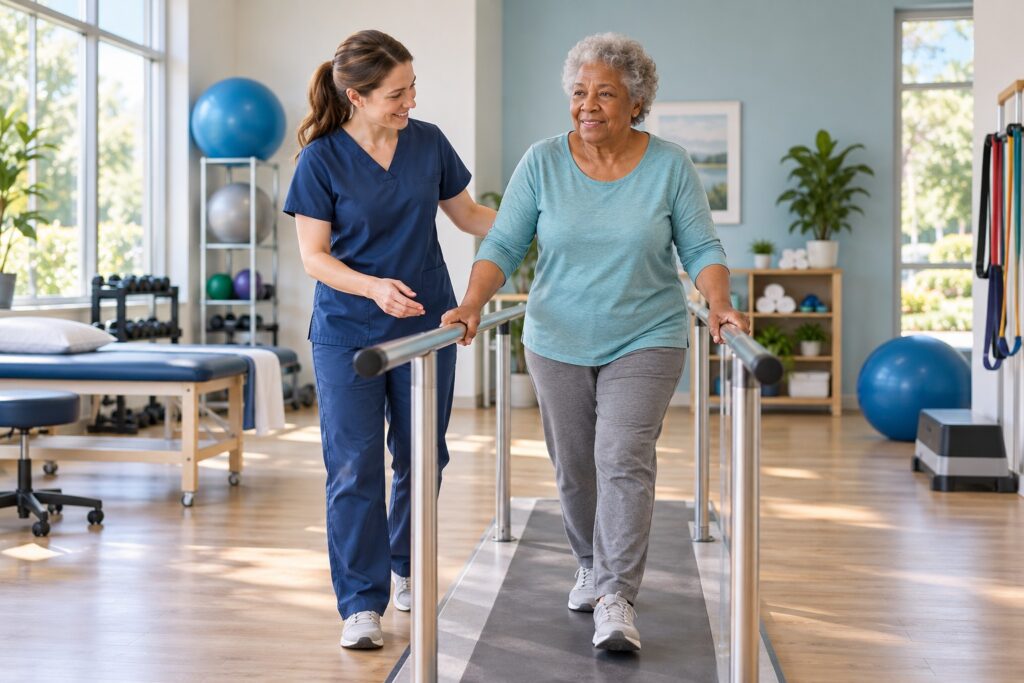
Balance and walking
Transfers, such as moving between a bed and a wheelchair
Endurance for everyday activity
Safe use of assistive devices, like a walker
Goals typically focus on functional movement. A resident may practice standing from a chair, transferring between a bed and wheelchair, walking with a walker, or navigating steps when appropriate.
Walking distance is one way to measure improvement, but therapists often look at much more. Is the resident walking with better balance? Do they need less physical assistance? Can they stand longer before becoming tired? Are they moving with better control?
These improvements carry into the rest of the day. Stronger legs may make it easier to stand from the toilet. Better balance can help someone stay steady while getting dressed. Increased endurance may make the walk to the dining area far less tiring. This is where physical and occupational therapy often naturally connect.
Occupational Therapy
Occupational Therapy Focuses on Everyday Independence
Despite its name, occupational therapy isn’t necessarily about returning to a job. In rehabilitation, the “occupations” addressed are often the everyday activities that give daily life structure and meaning, such as:
Bathing and grooming
Dressing
Toileting
Eating
Other personal routines that make a day feel like your own
An occupational therapist may evaluate how safely and independently a resident can perform these activities and identify strategies to make them more manageable. Suppose a resident has enough strength to stand but has difficulty getting dressed. The challenge could involve balance, limited range of motion, weakness, coordination, or trouble managing clothing. Occupational therapy can target the specific skills needed to complete that task, and therapists may introduce adaptive techniques or equipment when appropriate.
The goal isn’t necessarily to make every resident completely independent in every activity. Therapy helps each person work toward the greatest practical level of function based on their abilities and circumstances. Moving from substantial assistance to needing only a little help can be a significant achievement for someone recovering from a serious illness or injury.
Working Side by Side
How Physical and Occupational Therapy Work Together
Physical and occupational therapy can overlap, but each discipline brings a different perspective. Consider the seemingly simple task of showering:
Physical therapy may help a resident improve the strength and balance needed to walk safely to the bathroom, and may also address transfers and endurance.
Occupational therapy may focus more specifically on the bathing routine itself: getting in and out of the shower, safely reaching necessary areas, managing bathing supplies, and using adaptive strategies or equipment when appropriate.
Both disciplines are working toward a related goal: helping the resident take part more safely and independently in an important daily activity. This coordination helps rehabilitation feel connected to real life rather than like a series of unrelated exercises.
Speech Therapy
Speech Therapy Addresses More Than Talking
Speech therapy is sometimes misunderstood because its name sounds very specific. Speech-language pathologists certainly help residents who have difficulty speaking or communicating, but their role may extend into several other areas.
Speech therapy for seniors may address the following, depending on each resident’s needs:
Language, for residents who struggle to find the right words, understand language, or clearly communicate their needs
Cognitive-communication skills, including attention, memory, problem-solving, and organization, which can make certain daily tasks more challenging
Voice, so residents can be heard and understood with less effort
Swallowing, to support safer eating and drinking
For example, someone recovering from a stroke may know exactly what they want to say but struggle to find the right words. Speech-language pathologists evaluate these challenges and provide therapy based on each person’s condition and goals. As with physical and occupational therapy, the focus is on helping the resident function as effectively as possible in everyday situations.
Swallowing Support
Why Swallowing May Be Part of Speech Therapy
Families are sometimes surprised to learn that speech-language pathologists may also evaluate and treat swallowing difficulties. Swallowing involves a complex series of muscles and movements, and certain neurological conditions, illnesses, and other medical issues can interfere with this process. Difficulty swallowing can affect nutrition, hydration, comfort, and safety.
When a swallowing concern is identified, a speech-language pathologist may perform an appropriate evaluation and make recommendations based on the resident’s individual needs.
This is another example of coordinated rehabilitation. If eating becomes difficult, nutrition and hydration may be affected, and a resident who isn’t receiving adequate nutrition may have less energy for other rehabilitation activities. Addressing one area of function can support the broader recovery process.
Everyday Life
Therapy Goals Often Connect in Everyday Life
The value of coordinated rehabilitation therapy services becomes especially clear when you look at an ordinary day. Imagine a resident whose goal is to get ready for breakfast with less assistance. That one routine can draw on several kinds of support:
Each discipline has its own expertise, but the resident experiences the results as one thing: being able to participate more fully in everyday life.
Personalized Care
Personalized Rehabilitation Begins With Individual Goals
Not every resident needs physical, occupational, and speech therapy. Rehabilitation should be based on an individual’s medical condition, abilities, therapy evaluations, and care plan.
Two residents recovering from the same type of surgery may have completely different needs. One might require physical therapy for strength and walking but remain independent with dressing and communication. Another may need both physical and occupational therapy because the illness or hospital stay caused a broader decline in function.
Previous abilities matter as well. Questions like these help establish meaningful goals:
What could the resident do before the hospital stay?
Did they walk independently, or were they already using a walker?
Did they live alone?
How much help did they receive from family?
Rather than comparing one resident with another, rehabilitation professionals measure progress against the individual’s own starting point and the abilities that will matter in their next care setting.
Care Team Communication
Communication Between the Care Team Matters
Coordination isn’t only about therapists working toward related goals. Nursing professionals and other care team members also provide important information about how a resident functions throughout the day. A therapist may see someone during a scheduled session, while nursing staff observe how the resident manages mobility, personal care, meals, and other activities at different times. If pain, fatigue, appetite changes, or other medical concerns begin affecting participation, care team communication helps staff recognize those changes.
Families can contribute valuable information, too. You may know:
How your loved one functioned before the hospital stay
What the home environment looks like
Which activities matter most to them
How much assistance will be available after discharge
Sharing these details helps keep rehabilitation focused on practical, meaningful goals.
Discharge Planning
Preparing for the Next Stage of Recovery
For residents receiving short-term rehabilitation, a major goal is often preparing for a safe transition to the next setting. If someone hopes to return home, therapy can consider the abilities they’ll need there. Practical details like these can shape rehabilitation goals:
Are there steps at the entrance?
Is the bedroom upstairs?
Will someone be available to help with bathing or meals?
How far is the bathroom from the bedroom?
Will the resident need to communicate specific medical needs or safely manage everyday routines?
As discharge approaches, families can ask helpful questions of their own:
What can my loved one do independently now?
Where is assistance still needed?
Is any equipment recommended?
Would continued therapy or other services be appropriate after discharge?
The goal isn’t simply to complete a rehabilitation stay. It’s to prepare for what comes next.
Our Approach
Coordinated Rehabilitation Therapy at Scottish Pines
At Scottish Pines, rehabilitation is centered on the individual. Depending on each resident’s needs, physical, occupational, and speech therapy may address mobility, daily activities, communication, cognition, swallowing, and independence. When multiple disciplines are involved, their work can complement one another and support broader functional goals.
For families, understanding these roles makes rehabilitation easier to follow. Instead of seeing physical therapy as walking practice, occupational therapy as dressing practice, and speech therapy as communication exercises, it helps to see what all of these services work toward: helping your loved one participate more safely and independently in everyday life.
Recovery isn’t defined by a single measurement. Sometimes progress looks like:
Walking a little farther
Getting out of a chair with less help
Putting on a shirt independently
Communicating a need more clearly
Safely participating in a meal
When rehabilitation is personalized to the individual, these seemingly separate improvements come together to support something much larger: the ability to return to the routines, activities, and relationships that matter most.
FAQ
Frequently Asked Questions About Rehabilitation Therapy Services
What is the difference between physical and occupational therapy?
Physical therapy commonly addresses mobility-related areas such as strength, balance, walking, endurance, and transfers. Occupational therapy often focuses on everyday activities such as dressing, bathing, grooming, toileting, and other routines. Physical and occupational therapy may work toward related goals from different perspectives.
What does speech therapy for seniors help with?
Speech therapy for seniors may address speech, language, cognitive-communication skills, voice, or swallowing, depending on the individual’s needs. Speech-language pathologists develop treatment plans based on the resident’s specific condition and functional goals.
Does every rehabilitation resident receive all three types of therapy?
No. Rehabilitation services should be individualized. Some residents may benefit from one therapy discipline, while others may need a combination of physical, occupational, and speech therapy. Therapy recommendations are based on evaluations, medical needs, and individual goals.
How do rehabilitation therapists measure progress?
Therapists may measure progress through changes in strength, balance, walking, endurance, transfers, ability to complete daily activities, communication, swallowing, cognitive-communication skills, or the amount of assistance required. The measurements used depend on the resident’s needs and therapy goals.
How can families support a loved one during rehabilitation?
Families can share information about the resident’s previous abilities, routines, interests, home environment, and available support after discharge. They can also ask about current therapy goals, celebrate meaningful progress, and take part in discharge planning when appropriate.
See How Coordinated Therapy Can Support Your Loved One
Our team is here to answer your questions, explain how our physical, occupational, and speech therapists work together, and show you around our warm, homelike community right here in North Carolina.