- Follow Us:
- (910) 276-8400

Stroke Recovery: What Families Need to Know About Rehabilitation
June 22, 2026
When Should You Start Rehab Exercises After Knee Replacement Surgery?
July 22, 2026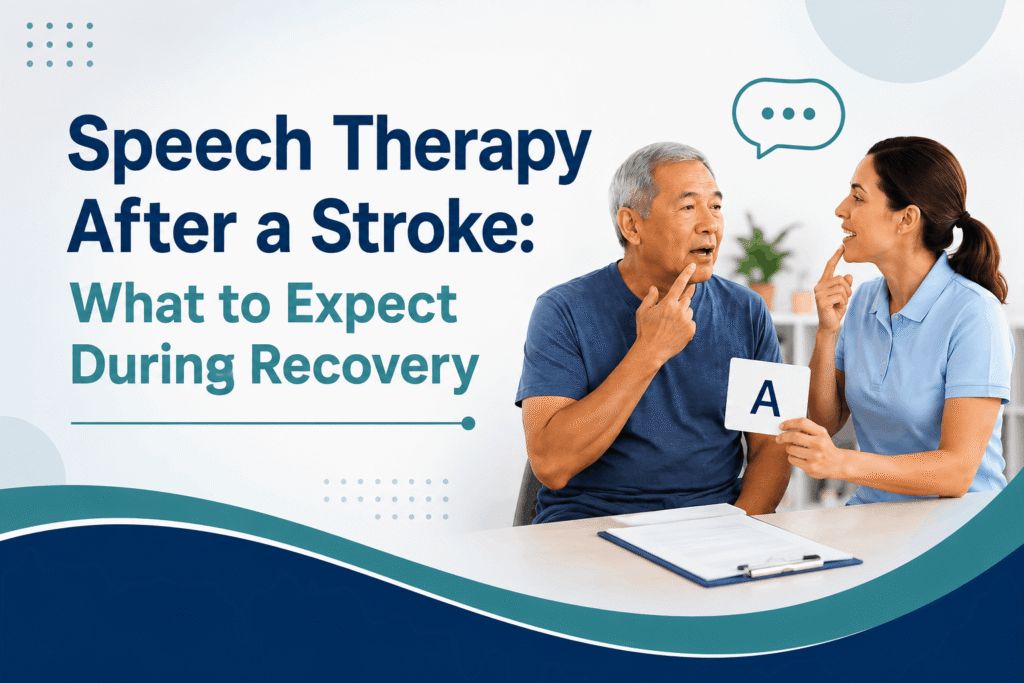
A stroke can change life in an instant, but with the right support, communication, swallowing, and confidence can be rebuilt over time.
A stroke can change many aspects of daily life all at once. While many people associate stroke recovery with regaining strength, balance, and mobility, the effects of a stroke often extend far beyond physical movement. For many survivors, communication, memory, swallowing, and language skills can also be affected, creating new challenges that impact confidence and independence. The good news is that recovery is possible.
With the right support, many stroke survivors make meaningful improvements in their ability to communicate, eat safely, and participate in everyday activities. One of the most important tools in this journey is speech therapy after stroke. Speech-language pathologists play a critical role in helping individuals rebuild skills, regain independence, and improve their quality of life following a stroke. Understanding what to expect during recovery can help patients and families feel more confident as they move forward.
Jump To Section
The Foundation
Why Speech Therapy Is Important After a Stroke
A stroke occurs when blood flow to part of the brain is interrupted, depriving brain cells of oxygen and nutrients. Depending on which area of the brain is affected, a stroke may impact the ability to speak, understand language, remember information, or swallow safely. These challenges can be frustrating and overwhelming for both patients and their loved ones.
Speech therapy focuses on improving communication and swallowing abilities by helping the brain create new pathways and strengthen existing skills. This process, known as neuroplasticity, allows many individuals to regain functions that may have been affected by the stroke. Because every stroke is different, every recovery journey is different as well.
Some people experience mild difficulties that improve quickly, while others require longer-term therapy and support. The goal is always the same: helping each individual achieve the highest possible level of independence and quality of life.
Recognizing the Signs
Common Communication Challenges After a Stroke
Many stroke survivors experience communication difficulties that can affect daily interactions and relationships. Some of the most common include:

Aphasia affects a person’s ability to understand language, speak, read, or write. Someone with aphasia may know exactly what they want to say but struggle to find the right words or understand conversations.
Dysarthria occurs when weakness or poor coordination in the muscles used for speech causes words to sound slurred or difficult to understand.
Apraxia of speech affects the brain’s ability to coordinate the movements needed for speech. Individuals may know what they want to say but have difficulty forming words correctly.
Cognitive-communication difficulties can involve challenges with memory, attention, problem-solving, organization, or processing information during conversations.
These difficulties can affect work, social interactions, and everyday tasks, making rehabilitation an important part of recovery.
Beyond Speech
Swallowing Problems Are Also Common
Many people are surprised to learn that speech therapists also treat swallowing disorders. After a stroke, some individuals develop dysphagia, a condition that makes swallowing difficult or unsafe. This can increase the risk of choking, dehydration, malnutrition, or aspiration pneumonia.
Signs of swallowing difficulties may include:
Coughing while eating or drinking
Food sticking in the throat
Difficulty chewing
Frequent throat clearing
A wet or gurgly voice after swallowing
Unexplained weight loss
Speech therapists perform swallowing evaluations and develop treatment plans designed to improve swallowing safety and reduce complications. For many patients, this aspect of therapy is just as important as improving communication.
The Process
What to Expect During Speech Therapy After Stroke
Beginning speech therapy after stroke usually starts with a comprehensive evaluation. The speech-language pathologist assesses communication abilities, swallowing function, cognitive skills, and overall goals for recovery. This information helps create a personalized therapy plan tailored to the individual’s needs.
Treatment may include exercises and activities designed to improve:
Word finding
Speech clarity
Language comprehension
Reading and writing skills
Memory and attention
Problem-solving abilities
Safe swallowing techniques
Therapy sessions often involve practicing real-life communication situations to help patients regain confidence in everyday interactions. Progress may sometimes feel slow, but small improvements often add up to significant gains over time.
Timing Matters
The Importance of Early Intervention
One of the most important factors in stroke recovery is starting therapy as early as possible. Early intervention takes advantage of the brain’s natural healing process and ability to adapt following injury. While improvements can continue for months or even years after a stroke, beginning therapy early often leads to better long-term outcomes.
That doesn’t mean it’s ever “too late” to benefit from therapy. Many individuals continue making progress long after their initial recovery period, especially when they remain actively engaged in treatment and practice skills outside of therapy sessions. Every step forward matters.
Partners in Recovery
How Families Can Support Recovery
Family members play an important role in the rehabilitation process. Communication challenges can sometimes lead to frustration or embarrassment for stroke survivors. Patience, encouragement, and understanding make a tremendous difference. Helpful strategies include:
Speaking slowly and clearly
Giving extra time for responses
Reducing background distractions
Using simple sentences when needed
Encouraging participation in conversations
Celebrating small victories and milestones
It’s also important to remember that communication difficulties do not reflect intelligence. Many stroke survivors fully understand conversations even when speaking is difficult. Maintaining respect, inclusion, and patience helps preserve confidence and dignity throughout recovery.
Coordinated Care
How Skilled Nursing Rehabilitation Supports Stroke Recovery
Stroke recovery often requires a team approach. Speech therapists frequently work alongside physical therapists, occupational therapists, nurses, physicians, dietitians, and other healthcare professionals to support the whole person rather than treating individual symptoms in isolation.
This coordinated approach allows therapy teams to address multiple aspects of recovery simultaneously, including mobility, self-care skills, nutrition, communication, and cognitive function. Comprehensive skilled nursing rehabilitation programs provide the structure and support many stroke survivors need during this important stage of recovery. Having access to multiple specialists in one setting allows care plans to remain coordinated and responsive as needs change over time.
Making the Choice
Choosing the Right Rehabilitation Environment
Selecting the right rehabilitation setting can have a significant impact on recovery outcomes. Facilities that offer comprehensive rehabilitation programs and experienced therapy teams are often better equipped to address the complex challenges that can follow a stroke.
At Scottish Pines Rehabilitation & Nursing Center, our team understands that stroke recovery involves much more than physical healing. Through personalized treatment plans and compassionate care, we provide speech therapy services in NC that help residents improve communication, regain swallowing function, and rebuild confidence as they work toward greater independence. Our interdisciplinary rehabilitation team works closely with residents and families to create individualized care plans focused on meaningful recovery goals and improved quality of life.
Moving Forward
A Journey Worth Taking Together
Recovering from a stroke is a journey that often involves far more than rebuilding physical strength. Communication, swallowing, memory, and cognitive skills all play a critical role in maintaining independence and quality of life. Fortunately, speech therapy after stroke can help survivors regain these essential abilities through personalized treatment, targeted exercises, and compassionate support.
Whether improving communication skills, restoring swallowing function, or strengthening cognitive abilities, therapy provides valuable tools for rebuilding confidence and independence. Combined with comprehensive skilled nursing rehabilitation and experienced speech therapy services in NC, stroke survivors have access to the support they need to achieve the best possible recovery outcomes.
At Scottish Pines, we are proud to partner with residents and families throughout every stage of the recovery journey, helping individuals move forward with hope, confidence, and renewed independence.
Ready to Support Your Loved One’s Stroke Recovery?
Our compassionate team in North Carolina is here to help with speech therapy, swallowing care, and coordinated rehabilitation. Reach out to learn more or schedule a tour.